
 What’s good for one group can be bad for another; this is how we can summarize politics in one sentence. The lately held Catalan Independence Referendum or the Brexit event or how we remember the 100 years of Bolshevik Revolution of Russia or the 160 years of undivided India’s first uprising against the colonial rule havesomething in common – people on both sides have their own set of arguments in favour of a particular setup; those who voted out of the EU in the Brexit poll considered their view as the rightful one, so were the supporters of Lenin in the Russian revolution against the Tsarist autocracy in 1917.
We remember the actions of politicians and political groups based on our own understanding and liking. One who has thrived under China’s one-party communist setup will hail the Communist Party of China while the detractors (proponents of democracy) wouldn’t. Same is the case with Indian political landscape where a good leader for someone is an autocrat, a dictator, a tyrant for the other. Rarely do we discuss the impact one has had on the country’s politics based on rationales and with a non-partisan view.
The Bharatiya Janata Party (BJP) of today is a powerful entity. The leaders of this party are serving as Prime Minister, Chief Ministers and in other crucial roles all across the country. The Congress has now been termed as ‘the grand old party’, which in the eyes of many political thinkers needs a thorough reformation to stay relevant. But was this the story a few decades back? Have we forgotten how Jan Sangh was only an alliance partner in the Janata Party government that dethroned the then dominant Indian National Congress in 1977, and that it wasn’t until the late 90s that the rechristened Jan Sangh as BJP could give India stable government?
Neither wasthen a wave like it is today for a single face, nor were there such high anti-incumbency sentiments. These are all the combined effects of the penetration of news and social media in the lives of the common people of today. How could then BJP emerge as the sole reliable opposition group to the Congress monopoly on the national level?
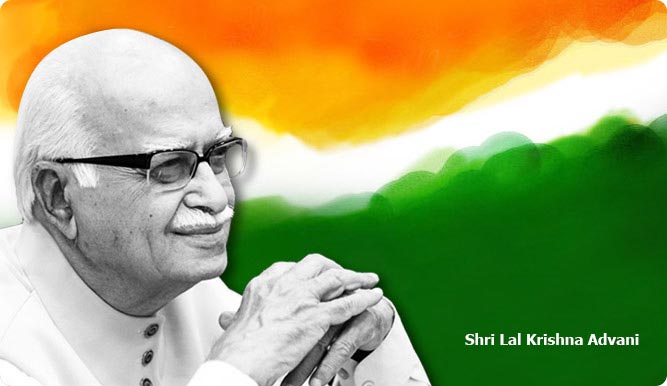
It is a well-documented fact that with Atal Bihari Vajpayee as president, whose approach to religion is regarded as ‘moderate’, BJP couldn’t gain the support it needed to challenge the clout of Congress and other regional parties. Had it not been the smart political campaign led by L K Advani in the 1980s, the BJP even today couldnot have emerged assuch a formidable political force. Many analysts and historians may have categorized hismethod as hardline Hindutva and undermined the contributions of Mr. Advani, but to him that piece of land in Ayodhya belonged to the Hindu God and asserting this in a peaceful manner through his Rathyatras was no unlawful act.
Here is the rationale the pseudo-seculars may need. The Uttar Pradesh government failed to add the iconic Taj Mahal to its tourism book for 2017 and the uproar that followed generated headlines. Would you then classify these faultfinders as hardline Islamists?The teachings of Rashtriya Swayamsewak Sangh (RSS) may have shaped his views on faith, but linking this association with what many term as ‘hardline Hindutva’ is deplorable, something that isn’t backed by rationales but by a veiled attempt to portray any non-Congress entity as an enemy of India’s secular and tolerant fabric.
Even the defeat of the BJP in 2009 cannot be directly attributed to its then Prime Ministerial candidate. The organization wasn’t as strong as it is today and the widespread denunciation of Congress and other regional parties that exists today wasn’t of same weight at that time. The media wanted sensational stories ahead of the 2014 general elections; hence the rise of Narendra Modi was termed as forced sidelining of Mr. Advani. Any political party needs to win the votes at the end of the day and if that had to come with a face that could connect well with the youth and discontented voters, the choice of Modi in 2014 was justifiable.
As he turns 90, L K Advani needs more of appreciation than sensationalism of what he could not achieve. As a matter of fact, occupying the office of Prime Minister of India isn’t as big an achievement as is establishing a political party against seemingly unassailable behemoth of those times, the Congress. It is an acceptable fact that had BJP chosen him to serve as the 14th President of the Republic of India, it would have been a much appreciated act. Sadly, the prevailing circumstances could not allow the same; however, confining L K Advani’s stature to only these offices would be similar to asserting that the World War II and not Gandhiji’s prolonged struggle brought India independence from British rule.
As a non-partisan countryman, it is time to accept what Mr. Advani, a true statesman, gave to the Indian polity – a party that stands taller than any other today, a party that is redefining good governance and could rid us from dynasty politics. It’s time we collectively hail him.
Comments are closed.