
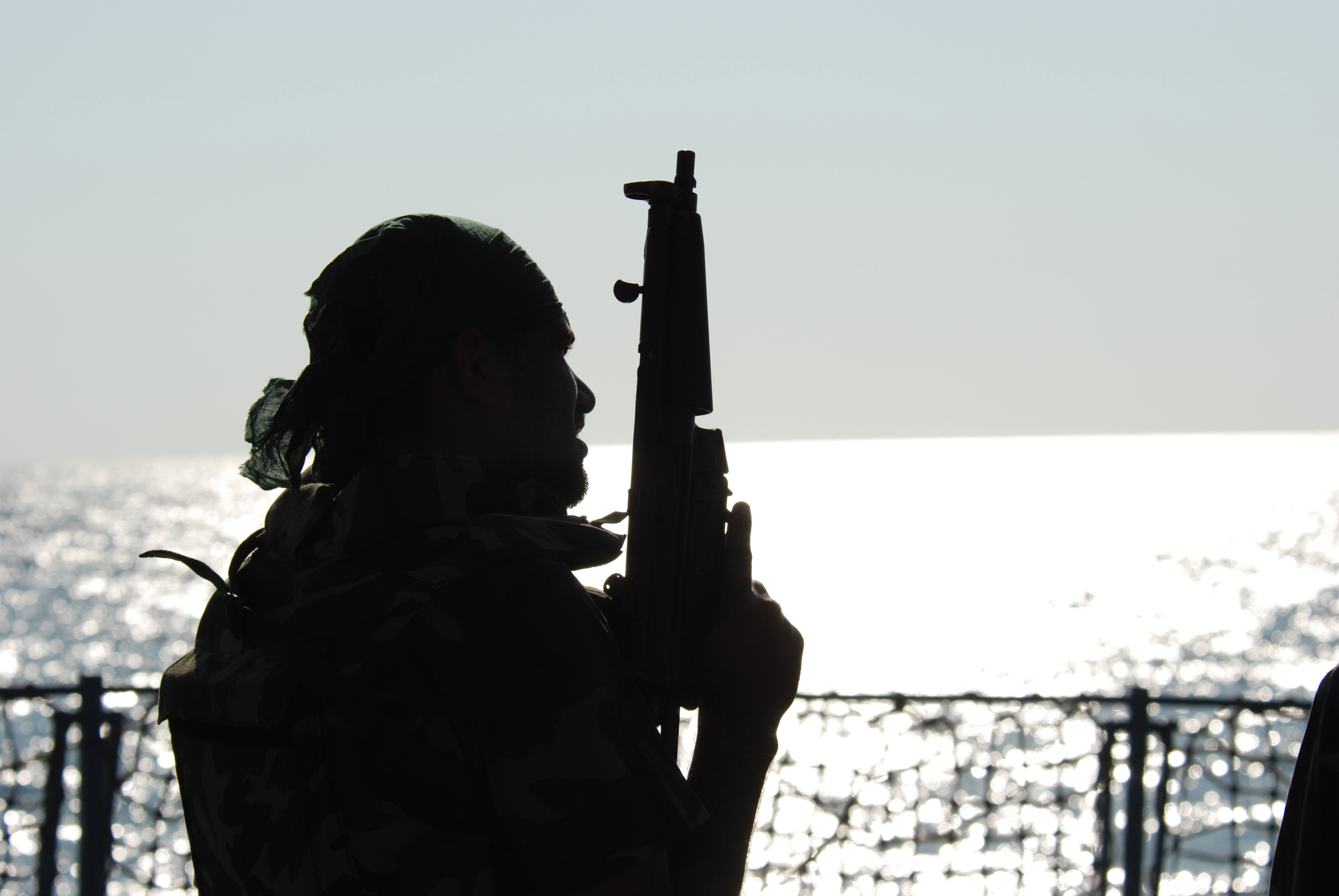
 Terrorism has been growing unabated the world over since the late 20th century. It has been used as a tool or weapon seldom by nation states but largely by ragtag terrorist outfits or ideologically-motivated groups of fighters against stable regimes in countries like Israel, India, USA and Russia. Of late, those who resort to terrorism call themselves freedom fighters or jihadists and are motivated by the ideological conviction of throwing occupation forces of colonial nations out of the lands that they claim belong to them by right.
They consider the USA their arch enemy and have been hitting and hurting the American interests and strategic assets practically all over the world, including the mainland US. Some of the terrorist outfits such as the Islamic State (IS) have, in a wide overreach of their unbridled ambition, declared the establishment of a Caliphate in parts of Syria and Iraq. The IS dreams of expanding its suzerainty over the entire West Asian and Gulf areas as well as several European, African, Mediterranean and South Asian countries, including sizable parts of India.
In their operations, they adopt medieval and barbaric practices like committing brutal and indiscriminate killings, rape, slavery, destruction and desecration of places of worship of conflicting and minority religious groups. They also enforce fastidious religious edicts dating back to medieval ages on pain of excruciating death or incapacitation not only against opposing armies but amongst the civilian population of the enemy countries as well. They have already committed numerous war crimes against humanity like ethnic cleansing, genocide, cultural cleansing, etc. The brutal onslaught of their inhuman terror attack is still on in full swing.
War on Terror
The War on Terror declared by the then US President George W Bush in October 2001 following the devastating terror attacks on key targets in the US by Al Qaeda, for hounding out the Al Qaeda leaders and cadre and bringing the rule of the Taliban in Afghanistan to an end, was drastically toned down and brought practically to a halt, after success was partially achieved, by President Barack Obama in 2013. President Obama acknowledged that it was more pragmatic and prudent to selectively carry out military attacks on selected targets of terrorists rather than fight a global war on Terror as a tactic.
The US and its allies are currently engaged in a fight against Al Qaeda and the Taliban in Afghanistan. USA’s ally Pakistan has not, however, been fully committed in the fight against the Taliban and Al Qaeda and has been doing far from enough to restrain and control the assorted groups of terrorists much to the chagrin of the US. Separately, the US, along with its NATO and non-NATO allies, has been fighting a war in Iraq and Syria since 2013 against the IS in addition to a war against the regime of Syrian President Bashar al-Assad. Russia has, in a show of defiance to the US dominance in the region, come out in support of President Assad and joined the fray by mounting intensive aerial attacks against IS in Syria, causing immense damage to the enemy.
Defence Preparedness
Defence preparedness must be a country’s topmost priority as it is critical for the very survival of any nation state. In this context, given India’s geographical location and the complex nature of its political relations with its neighbours, especially China and Pakistan, our country is required to be on the alert all the time. After attaining independence in 1947, India has already fought five bitter wars with Pakistan and China. While some were won by us, the others were either inconclusive or downright disastrous. None of the wars brought the nation prosperity or material gain. They were not intended to.
Those were wars that we had to fight at enormous costs to defend the country’s territory and save our nation’s honour. Besides, the armed forces have to be on the alert practically all the time, with barely any let-up, on account of the countless numbers of border incursions, indiscriminate shootings from across the frontier without provocation, military conflagrations, skirmishes, flare-ups and standoffs likely to degenerate into warlike situations. Thus, high defence preparedness is an inescapable deterrent not only in conventional warfare but also in the war against terrorism.
The current defence budget of our country is a whopping Rs 250,000 crore. Moreover, the BJP-led NDA government has been giving topmost priority for the modernization of the armed forces, equipping the forces with the most modern weapons and equipment, refurbishing the ageing fleets of fighter aircrafts and warships and tweaking the DRDO for indigenous defence production. Notwithstanding the fact that India is not a superpower with an inexhaustible supply of resources to spend on the protection of its territory and strategic assets as well as the lives and property of its citizens at enormous costs, our country has been making steady progress in its defence preparedness.
Pakistan and Terrorism
Dismayed over its failure to take on India in traditional warfare, Pakistan considers terrorism a genuine weapon to be used for resolving its feud with India. Pakistan-occupied Kashmir has turned out to be a fertile ground for the breeding of terrorists. Uneducated and unemployed youth are recruited, indoctrinated and trained in carrying out terror attacks by Pakistan’s intelligence agency and army. They infiltrate into India by crossing the border, under the cover of fire from Pakistani troops.
These terrorists are heavily armed with guns, explosives, fake Indian currency, etc supplied by the ISI and the Pakistani army. They establish contacts with the disgruntled separatist elements and mercenaries in the Kashmir Valley, with whose help they manage to spread on to different parts of India. The aim of these jihadist elements is to carry out terror attacks, kill or maim innocent people and cause damage to the political fabric of the country. Destabilizing the political system of India and creating chaos in the orderly life of its citizens are the goals of the terrorists.
 Objective of Terrorism
The target of a terrorist is not a professional army nor its objective victory in a war. The target is the civilian population, and the aim is to make them freeze into inaction and make the nation bleed. A series of explosions is carried out in a metropolitan city within a short span of time, causing the death of scores of defenceless and vulnerable people in a densely populated area, thus rudely interrupting and throwing the daily routine of the survivors of the mayhem out of gear. The idea is to show off the ability of the security forces to protect the citizens of the country in poor light.
For instance, a commercial airliner is hijacked, and hundreds of passengers are held captive and demand for the release of some militants held in a high-security prison are put forward. The entire nation plunges into gloom and uncertainty and wonders what is going to happen next. Irrespective of the final outcome of the standoff between the terrorists and the law-enforcing agencies, the tension and uncertainty created by the incident are what the terrorists want to achieve in the long run. The release of the incarcerated militants is a short-term goal. Similarly, on the eve of festivals and national holidays, people are advised by the police authorities to avoid crowded areas, be alert and watch out for suspicious-looking persons lurking around and suspicious-looking objects lying about.
The need to be on a perpetual state of alert causes the joy and euphoria of hanging around in the public fizzle out and render the festive atmosphere fall flat like a cola without the fizz. Public places surcharged with an extremely sanitized atmosphere, and crawling security agencies, in the uniform or plainclothes, are the last places that one wishes to visit on a holiday and spend quality time in the company of family or friends. When the holiday is finally over, instead of reliving moments filled with fun and frolic and looking for doing it again, one heaves a sigh of relief and shudders at the thought of the horror that could have resulted if things had gone wrong in case of a terror attack, which was very much on the radar of possibility but mercifully did not occur.
Prime Minister Modi’s Initiatives
No sooner had he been elected as the Prime Ministerial candidate of BJP in the 2014 Lok Sabha elections, than Narendra Modi demonstrated his proactive stance in mending fences with Pakistan. He invited the Prime Minister of Pakistan along with Heads of other member countries of SAARC to his inauguration. In the one-to-one meeting that he had with Nawaz Sharif, he made it abundantly clear that his Government would give no quarter to acts of terror on the Indian soil by Pak-trained militants. He also insisted on the expeditious trial of the terrorists involved in the attacks carried out in Mumbai in 2008.
Simultaneously, he made a positive gesture by agreeing to host talks between the two countries at the level of Foreign Secretary. This was followed up by another pro-active measure by his agreeing with Nawaz Sharif in his meeting in Ufa, Russia, to host talks on terrorism at the level of the National Security Advisers of the two countries in August this year. Due to the recalcitrant behaviour of Pakistan, the talks did not materialize on either occasion. This was entirely because of the obduracy of Pakistan, which was not willing to discuss terrorism and was keen on the leader of its delegation being allowed to meet the Kashmiri separatist leaders before the scheduled talks commenced.
India would not allow Pakistan under any circumstances to cross the new red lines, talks or no talks. There has resultantly been a standoff on India’s peace initiatives. To make matters worse, Pakistan has been lambasting India for allegedly instigating and abetting acts of terror in Balochistan! Pakistan’s NSA, Sartaj Aziz, went to the extent of threatening India with Pakistan’s nuclear weapons.
Pakistan in a Bind
On account of the fact that Pakistan had already carried out 192 ceasefire violations until July 29 this year along the international border in Jammu and Kashmir resulting in significant civilian and defence casualties, Chief of Army Staff General Dalbir Singh Suhag pointed out that a very high level of operational preparedness at all times had become part of India’s strategy as there was recognition that the swift, short nature of future wars was likely to offer limited warning time. Meanwhile, his Pakistani counterpart threatened India with “unbearable damage” in the event of a war.
Notwithstanding Pakistan’s brandishing the threat of a nuclear attack from time to time, India has already demonstrated its capability of striking at the terror elements that take refuge in other countries, by successfully carrying out a short and swift commando operation in the jungles of Myanmar earlier this year. This has resulted in Pakistan feeling all the more threatened of the terror network that it has been assiduously building on its territory coming under a similar deadly attack by Indian forces.
A measure of tremendous importance taken by Prime Minister Modi was to formally conclude and finalize the Land Border Agreement with Bangladesh as this measure would enable the authorities to monitor the situation of infiltration of undesirable elements into India – a vital step in the war on terrorism. The cyber laws need to be tightened, and punishment for violation or infringement made harsh by the government to ensure that terrorists do not succeed in using the internet and social media for propagation or recruitment purposes.
Addressing Global Terrorism
In his recent visit to the US in September this year, Narendra Modi had meetings with US President Barack Obama, British Prime Minister David Cameron and French President Francois Hollande, and they discussed global terrorism, among other things. He pointed out in these meetings as well as his address at the UN that terrorism was a global phenomenon that had an adverse impact on practically every country without exception. And no country was immune to this threat, which India had been battling for four decades now. Modi also pointed out that the time had come for the international community to speak with one voice on this issue and adopt the long pending Comprehensive Convention on International Terrorism, which had been delayed because of the disagreement on the definition of terrorism. Modi’s views were met with agreement from his interlocutors.
Pakistan’s Counter-Charge
Pakistan has claimed that it has handed over to the UN Secretary General dossiers purportedly containing details of alleged Indian interference and also support for terrorism in Balochistan and Karachi as well as the links between its security and intelligence agencies and the Tehrik-e Taliban Pakistan, especially in FATA. Pakistan’s representative at the UN accused India of using the “terrorism bogey” for stalling the bilateral dialogue between the two countries.
Rubbishing Pakistan’s four-point formula for peace, External Affairs Minister Sushma Swaraj asserted earlier it was ready to discuss all the issues if the neighbouring country addressed “just one” point of ending terrorism emanating from there. She also referred in her address to the perpetrators of 26/11 Mumbai attacks who have been roaming around freely in Pakistan and urged the world community to ensure that countries providing finances, safe havens and arms to terrorists “pay a heavy price”.
People’s Role in the War
While India government is thus fighting its case against terrorism at the international fora, the people of the country would do well not to lose track of their own role in the ongoing war on terrorism. Eternal vigilance is the price that every nation has to pay for liberty. Unless the people are attuned to the developments in this regard on the international front and are psychologically prepared to play their part, the government’s efforts in this regard would remain incomplete. The responsibility that weighs with the people assumes greater significance because of the fact that the onslaught of the terrorists has dangerous religious connotations capable of causing a rift in the society along communal lines.
Hence, for the common man the need of the hour is to be vigilant and combine it with the ability to identify the troublemakers without deliberately offending the susceptibilities of the peaceful and law-abiding citizens of any of the communities. It would be a good idea to form area-wise citizens’ peace committees to act, strictly in coordination with law-enforcement agencies and not on their own as loose cannons, to act as the eyes and ears of the said agencies and report cases of suspicious activities of strangers or residents suspected of involvement in cases of inciting violence, money laundering or such unlawful activities.
Regular meetings of police authorities with community leaders and representatives of political parties could help avert instances of irresponsible behaviour by irascible elements, inflammatory speeches, etc. Local friendship associations could be formed with the participation of youngsters from all communities to forge a healthy understanding between the communities. It must be ensured that religious festivals and functions are peacefully organized to avoid situations where potential terrorists could cause trouble and create explosive situations.
Contingency plans should also be put in place for managing the situation in case of a terrorist attack, without allowing rumours to spread and the situation to get out of control. These are but a few of the baby steps that members of every residential area should be able to adopt. Above all, complacency should be nixed and replaced by eternal vigilance.
Are We Doing Enough?
No amount of preparation is enough to keep such a large country as India with a huge population, given the idiosyncrasies of the system and the society, out of harm’s way all the time. But all of us can rest assured that the current BJP-led NDA government is closing the gaping holes in the system and chinks in the defence armour. Bits and pieces are falling in place in our country’s preparations, slowly but steadily. And surely, we will overcome the odds and win the war. There is no choice.
Comments are closed.