
 India’s current financial year (April-March) is a British legacy. It was introduced in 1867, following the adaptation of the Gregorian system of accounting. The primary reason for the identification of this period by the British was the crop pattern, with the revenues flowing from taxes levied mostly on agricultural products. Furthermore, December was not considered an appropriate month for the closure of accounts as it was a festive season when retail traders were busy with their Christmas celebrations, holidays and related activities.
Why the Change of Period
Undoubtedly now there are sound reasons for the proposal to switchover from the April-March period to January-December for India’s financial year. India being a predominantly agricultural country, the agriculture sector is a major contributor to the health of the nation’s economy. The agriculture sector contributes more than 15% to our country’s GDP. Over 85% of rural households depend on farm yields. The switch to January-December would afford the Union Government adequate time to assess the effects of the southwest and northeast monsoons on the agricultural sector, including crop production, food supply chain, retail grain trade, industrial demand, the collection of related statistics and data, etc before undertaking the preparation of the Union Budget.
Another factor that goes in favour of the January-December cycle is the working season. After the Budget is passed, it typically takes three months for financial allocations to reach the field and another three months for the work to start. In the case of the April-March fiscal year, by the time the work is about to begin in September, rains would have started, causing a delay in the work. However, in the case of the January-December cycle, the six months hiatus would be over by June which leaves a longer time span for the work.
Moreover, the shifting would enable the synchronisation of India’s financial year with that of more than 156 countries and several multinational companies, which open their financial accounts in an ebullient mood on January 1 alongside the ushering in of a new calendar year after a joyous holiday season. As such, it makes abundant sense to adopt the January-December period as the financial year, if only to keep in sync with the comity of a large number of nations. On a lesser note, the Delhi winter provides a very welcome period to the legislators to take up the Budget proposal for serious discussion rather than during the sweltering heat of a harsh summer.
Shankar Acharya Committee
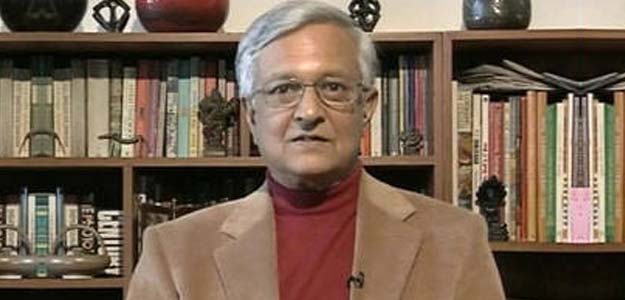
Against the above backdrop, following two successive droughts, the Narendra Modi Government, known for breaking the mould with traditions, constituted a committee headed by Dr Shankar Acharya, formerly Chief Economic Advisor, to study the merits of a recommendation made by Niti Ayog, to align the financial year with the calendar year. The Committee submitted its report in December 2016, supporting the proposal. The Rabi and Kharif summer and winter crop periods and the monsoon cycle were the primary factors for the Niti Ayog’s recommendation to be backed by the Shankar Acharya Committee. While endorsing the move for changing the accounting period, the Committee asserted that the change would align the fiscal with the country’s agricultural harvests and the monsoon cycle. Here, it needs to be stated that if the Union Government decides to shift the financial year, it would also have to change the date when the Union Budget will be presented.
While the Budget will have to be presented in November, Parliament sessions will also have to be reworked, along with changes in data collection and working of the state governments. If the latest move to advance the date for the presentation of the Budget for 2017-18 to February 1 from February 28 is any indication, then it seems that the NDA Government has already decided to change the financial year to the January-December period sometime in future. It is likely that the proposal will take one or two years to materialise as the Opposition political parties have already orchestrated a campaign to oppose the Centre’s initiative to advance the presentation date of the forthcoming Budget by one month.
Opposition up in Arms
The Opposition parties, in disarray and already flustered and flummoxed by the surge in the goodwill among the people for the BJP, following the surgical strike successfully dealt across the border and the equally effective measures on the home front to curb terrorism and unearth black money, are currently clueless as to how to restore even a modicum of the people’s faith and trust in them. Consequently, they have seized upon the Centre’s initiative to advance the presentation date of the Union Budget by one month. The Election Commission’s announcement of the general elections to the state assemblies in Punjab, Uttar Pradesh, Uttarakhand, Goa and Manipur, to begin barely three days after the proposed date of presentation of the Budget, has given the Opposition a shot in the arm. The united Opposition has taken up the issue with the Election Commission, arguing that the Union Government would likely announce populist programs and measures in Budget 2017-18 with an eye on the state elections to be held between February 4 and March 8.
This would, according to them, give the BJP an undue advantage over the Opposition parties at the polls. They have, therefore, demanded that the upcoming Budget be presented only after March 8 by which date the elections would be over. They have also sought the intervention of the President of India in the matter. In response to their plea, the Election Commission has sought the Central Government’s views on the issue. The President has, however, given his assent to the commencement of the Budget session of the Parliament on January 31 in deference to the Government’s proposal. The BJP, on its part, has refuted the Opposition’s charge and claimed that the General Budget is for the entire nation and not state-specific. It has called the Opposition’s stance anti-poor and anti-farmer.
Hackneyed Proposal
Meanwhile, here it is worth recalling that there is nothing new about the plan to realign the financial year to sync with the calendar year. It has been a much-debated issue, taken up in a fresh round of discussions from time to time over the years, only to be eventually kept on the backburner. It was as early as in 1984 that a committee – L K Jha Committee – was constituted by the then Congress Government to examine the proposed shifting of the financial year. The Committee unequivocally recommended the proposal on the ground that this would soften the impact of the southwest monsoon on the Union Budget.
Though the Jha Committee’s recommendation had received the support of several state governments and parliamentarians, the then ruling Congress Government did not accept it on the grounds that the benefits that were likely to accrue from the shifting were too marginal and not worth the extra efforts needed to be put in to collect the required data from the market and the long time that the exercise was expected to take. Notwithstanding these reasons, it was obvious that the Government could not be bothered to stir out of its comfort zone to be innovative. Nor was it prepared to introduce the required amendments to tax laws, prevailing systems, etc.
Objection Facile
The Opposition’s point of objection to the advancing of the presentation of Budget from February 28 to February 1 is superficial, if not facetious. To claim that the Central Government would entice the voter with an announcement of sops, freebies and populist schemes, to be made only a few days before the polls, is an expression of contempt and cynicism for the voter. The Indian voter has, time and again, demonstrated in the past that his political maturity and sagacity are beyond the pale of a doubt by any political pundit. He is not easily swayed by the lure of pre-poll promises. In short, his voting pattern is based on the track record of the parties and candidates contesting the elections. Hence, there is no reason or pretext to surmise that he would act any differently this time around. The apprehension, real or feigned, of the Opposition parties, is, therefore, baseless and unfounded. That is the reason why the BJP termed the Opposition’s demand for delaying the Budget presentation anti-people.
Government’s Call
Notwithstanding the important reasons for the switchover of the financial year to align with the calendar year, owing to the objection raised by the Opposition that has vociferously protested the government move, the question now arises as to whether the Central Government has the prerogative to choose the timing of the presentation of the Budget. Let us not overlook the fact that there is nothing sacrosanct about maintaining the April-March period for this purpose. The flimsy reasoning that the Budget proposed to be presented on February 1 this year will be followed in just three days time by general elections to the legislative assemblies in five states stands no scrutiny on pragmatic grounds from a long-term perspective.
This is on account of the fact that practically every year there are elections in some states or the other, which might hinder presentation of the Budget and delay the onerous task of the Union Government merely because the timing is found inconvenient by some or all of the Opposition parties. To present the General Budget in different months, year after year in a bid to accommodate the exigencies of elections to states would, by no stretch of the imagination, be a healthy democratic practice. Elections are conducted by the Election Commission, which as an autonomous institution, decides on the time schedules irrespective of the convenience of any political party whether it is in the ruling or opposition ranks.
It would be only fair to expect the Union Government, which enjoys the mandate of the people of the nation as a whole, to enjoy the prerogative on the same lines as the Election Commission to choose the timing of the Budget in terms of the administrative exigencies and convenience to implement the budgetary provisions with prudence and pragmatism for optimal effect.
Comments are closed.