
 If the incongruity of the ideology of Communism, which was foreign to the Indian polity in the first place, nesting in the political hotbed of Kerala strikes an outsider as inexplicable, the reason for his puzzlement could only be attributed to his lack of understanding of the ground realities in God’s Own Country. An extremely fertile land with a pronounced landlord-agricultural labourer divide, Kerala has been home to a society as deeply caste-ridden and faction-riven as any other state in the country. Kerala, however, differed from other states by waking up early to the importance of education. Successive governments in the state made education a priority area of development, especially among women and the deprived sections of society that had heavily depended on agricultural work and were exposed to the hazards of harassment and exploitation by high caste land owners.
Resultantly, today Kerala boasts not only of a very high literacy rate but also of other equally impressive social indices like low fertility rate, low infant mortality rate, high life expectancy, women’s right to inheritance of property, etc. A fertile ground for class-war, Kerala witnessed the dawn of Communism soon after our country attained independence. The Communists lost no time in cashing in on the high level of political consciousness of the people in the wake of the fast-spreading education. Without waiting for the fault-lines of religious and casteist factions of the society to disappear, they plunged headlong into electoral politics. They championed the cause of the peasants and advocated land reforms. They further challenged the capitalist policies of the Indian National Congress (INC) and the traditional bourgeois mindset of the society.
Communism and Electoral Politics
In 1957, soon after Kerala was reorganized on linguistic basis, it earned the distinction of becoming the first Indian state to have a democratically-elected Communist government in the country and the second in the world, after San Marino, the smallest and oldest surviving republic. The Communist Party of India (CPI) contested the election on the plank of fighting against feudalism and defeated the ruling Indian National Congress. With a Communist government in place, Kerala became the sole exception to have a non-Congress government in the country.
However, the Communist rule in Kerala was short-lived. The Congress government at the Centre, which could brook no breach of the party’s national supremacy, invoked Article 356 of the Constitution and dismissed the government led by EMS Namboodiripad. Meanwhile, during their short stay in office between 1957 and 1959, the Communists had successfully introduced the Land Reforms Ordinance and the Education Bill, which generated a special resonance among the people of the state. That reverberation lasts till today in God’s Own Country.
Appeal of Communism
The highly controversial dismissal of the state’s first Communist government by the Congress regime at the Centre was only one of the several factors that led to the flowering of Communism in the backwaters of Kerala. The ground-breaking Land Reforms Ordinance and the controversial Education Bill introduced by the Communists were runaway hits with the people. Furthermore, the land reforms carried out in the 1960s and 1970s contributed immensely to the popularity of the Communists. The people of Kerala are perceived to be among the most politically conscious people in the country. Strikes and dharnas over perceived inequalities and injustice to the working class and the strident demands of their rights are a regular political feature in the state. The daily wage labourers in Kerala are consequently the highest paid in the country.
Widespread education has made the people major beneficiaries of insights into the political happenings and developments all over the world. The effects of a recession, the slowing down of economies worldwide and the fallout of globalization are as much a staple subject of animated discussions in teashops over a vernacular newspaper as in the plush drawing-room comfort of posh, uptown residential areas. The passion and fervour with which the discussions are carried out in diverse backgrounds, amazingly match in extent and depth of the subjects. The high level of political consciousness and the outreach of education among different sections of society seem to have, however, turned into more of a bane than boon, with little manufacturing activity and industrialization in the State, primarily due to frequent strikes and hartals.
Unemployment and Petro Dollars
Because of widespread education coupled with very little manufacturing activities happening across the state, the unemployment rate in Kerala has been relatively high and its industrial progress has been woefully dismal as compared to other states. A primary reason for the laggardly growth of the manufacturing and industrial sector in the state is the extreme reluctance of multinational companies, Indian corporates and entrepreneurs to set up new business ventures owing to lack of infrastructural development and fears of industrial unrest on account of the aggressive postures of the Communists – irrespective of whether they are in power or the Opposition. A niggardly pace of industrial progress and high rate of unemployment have led to an exodus of qualified young men and women as well as of unskilled labour to different parts of India and even to distant shores, especially the Gulf countries. This development turned the tide and transformed the state’s economy from an agrarian to remittances and services-based one.
As a large workforce has been going to other states as well as abroad for earning its livelihood, lack of jobs and employment opportunities is not felt in the state as acutely as it used to be in earlier times. Kerala ranks at the top among the Indian States receiving NRI remittances, which renders poverty conspicuous by its absence. These remittances, along with revenues earned from trade and tourism, are the primary sources of contribution to the budget inlays of the state government. The massive amounts of remittances from abroad have unintended fallouts too. The Gulf petrodollars that come as remittances have made the State a huge consumer market. Consequently, there are plenty of trading firms, shops, FMCG dealers, tour operators and travel companies that provide employment to unskilled workers. Thanks to a large NRI population from the state and good purchasing power of the Kerala populace, courtesy massive remittances from the Gulf, sectors such as Education, Healthcare, Tourism and the Service sectors are doing well. That translates into the creation of job opportunities albeit on a modest scale in the services and trading sectors.
 The Flipside
The flipside of the transformation of the state’s economy into one based on remittances, services and tourism, is made up by the unintended fallout of prices of essential commodities and consumer goods shooting up disproportionately, triggered by the cash flow based on NRI remittances. Such a situation leads to the economy being precariously positioned on a facade of variable factors such as the continuation of peace and normalcy in the Gulf region and other countries that constitute the favourite beat of the migrant workforce from Kerala.
The unstable nature of the economy based on uncertain factors, migration of able-bodied young men and women with or without qualifications to greener pastures, thanks to the absence of strong industrial underpinning, contributes in no small measure to high rates of alcoholism and suicide in the State. As such, Kerala outranks all other states in India at the per capita level of alcohol consumption, and it also has one of the highest suicide rates in the country.
Political Formulations
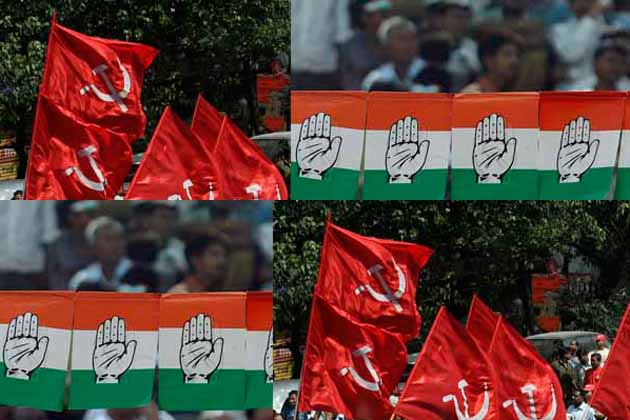
In Kerala, political fortunes have been swinging between the Indian National Congress-led United Democratic Front (UDF) on the one hand and the Communist Party of India (Marxist)-led Left Democratic Front ( LDF) on the other. The LDF, consisting of CPI (M), CPI and others, has turned out to be the arch rival of the Congress in Kerala, with no other viable alternative to challenge the latter for the top slot. The UDF was created in the 1970s by the Congress, which is now firmly entrenched in the State with its traditional vote banks among minority Christians and Muslims and some sections of the majority Hindu community.
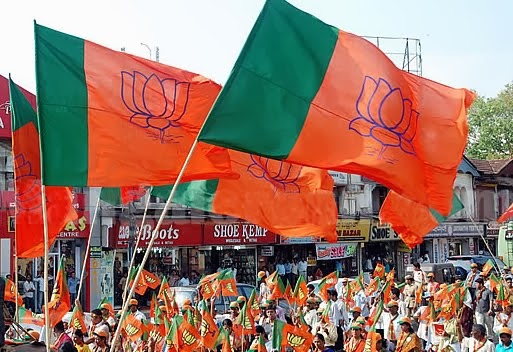
It projects itself as a coalition of different social, caste and religious groups and as a counterbalancing force of LDF, which is spearheaded by the CPI (M) and wedded in principle against an alliance with communal parties. The Bharatiya Janata Party (BJP) that is branded ‘communal’ by the insidious pseudo-secular forces had the daunting task of finding a niche space in the highly fractious political scenario of Kerala, with the UDF and the LDF menacingly straddling the scene. Several years of a tenacious fight later, it has slowly and steadily emerged as a serious contender for political supremacy.
Fickle Economy
Uninterrupted spells of rule by the UDF and the LDF, both of which are solely interested in the retention of power and the maintenance of status quo, has reduced Kerala to a sorry state with neither infrastructural development nor establishment of industrial ventures in sight. How long could the kiss of life by remittances from abroad keep the economy of consumerism alive and kicking? Come a war or regional political disturbances in the Gulf or West Asia, the lifeline of petro dollars will dry up and see the State’s economy choking. A political atmosphere hostile to globalization and the opening up of economy breeds a spate of lightning industrial actions that is hardly conducive to a healthy tourism industry.
Although the State is heavily dependent on the tourism sector, the government keeps sending out confusing signals in matters like Prohibition, which have adverse impacts on the inflow of foreign and domestic tourists. Even otherwise, revenues generated by the tourism sector seep to overseas tourism companies and other Indian states by means of service taxes, making the industry fickle.
Need of Sound Economy
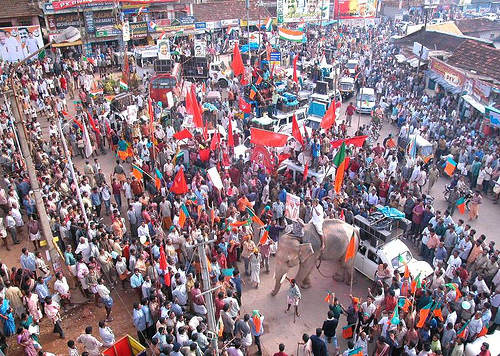
How strong and stable could an economy based on the services and tourism sectors be compared to one based on a solid industrial base? The Communists have been vehemently opposing globalization and stalling FDI inflows, holding rallies and dharnas spewing venom against the opening up of the economy and preventing the State and the people from becoming beneficiaries of the global phenomenon. Congress has been vying for honours with the Communists holding the state to political ransom, with its unbridled ambition of holding on to power with nary a progressive policy for the growth of the economy. The State is verily positioned between a rock and hard place with no sign of a letup in the stranglehold of Communism over the State and the regressive economic policy and reprehensible survival tactics of the Congress.
Whipping a Dead Horse
The vicious circle of the power game by the paper tigers of Communism and the spent forces of Congress needs to be broken forthwith to enable Kerala to get over its economic languishment and join the mainstream politics of development and progress. While the rest of the nation, with a few exceptions, is surging ahead, by latching onto the Modi bandwagon, Kerala is still experimenting with Communism as a viable political ideology as well as with the Congress. Here it is worth recalling that Communism has miserably failed everywhere in the world while the Congress has been bristling with scams like a mongrel with fleas on its back and it has been unceremoniously relegated in most of the states to the dustbins of history. Thus, Kerala has been continuing this futile experiment with the alacrity of someone determined to whip a dead horse back to life.
Oxymoron
The people of Kerala do not seem to be ready yet to bid farewell to Congress and Communism, although both the parties have become shell organizations long ago, bereft of an ideological base and people-oriented policies. Today, the main plank of the Congress is Secularism, which it proposes to accomplish with the support of the Indian Union Muslim League, a dyed-in-the-wool communal party, and other constituents of the UDF such as the Kerala Congress (M), Revolutionary Socialist Party, Janata Dal (United) and Kerala Congress (Jacob). With the Congress party itself and its allies being heavily dominated by minority community leaders, their claim to defend Secularism makes it an oxymoron.
LDF’s Vote Bank
LDF, on its part, has been consolidating the Hindu community votes, especially of the Ezhava and other backward sections of the community by advocating their cause in matters of economic activity and social upliftment in the highly faction-ridden society. The surprise element of CPI (M)’s political equation is that its claim to spearhead the cause of Secularism is not taken seriously by the minority Muslim and Christian communities, which have been rallying around the UDF.
Meanwhile, the ‘impressive’ track record of Congress in the appeasement politics of the minorities in the name of promoting Secularism has made it the rallying point for the Muslim and Christian communities, which are wary of the Godless Communist party. A section of the Hindu community who are disenchanted with the CPI(M) on account of its tireless talk of class struggle and the Communist mumbo jumbo, has been settling for what they consider is the lesser of the two evils, namely the UDF. There is thus a vertical split of votes between the two Fronts, neither of which has displayed interest in developmental politics.
Third Option Ahoy!
However, lately the people of Kerala have displayed some interest in experimenting with a third political option – the BJP. The spirited performance of BJP in the Aruvikkara by-election as well as the civic body polls held in the State this year has amply demonstrated that it has got its poll strategy right and that it is ready to steal the thunder from the LDF by mobilizing support from the backward Ezhava community, Scheduled Tribes and the forward Nair community by pitting itself as the principal challenger of the UDF. By consolidating the Hindu community votes and making a genuine attempt to convince the minority communities that their position would be more secure and interests better served under a BJP disposition, it could strategize a winning formula to pitchfork itself onto the centre stage of the State’s political scenario.
The UDF and the LDF would, in that event, be hard put to jointly counter an ideologically strong BJP on the plank of developmental politics. The ushering in of the BJP to the portals of power is now the only option available to the electorate of Kerala for getting the industrial and manufacturing sectors back on the rail. Foreign Direct Investment (FDI) inflows are the need of the hour and not the empty talks of Secularism.
What Kerala currently needs is infrastructural development and industrial growth; and not appeasement politics. The industrious people of Kerala who have transformed themselves into valuable human resource assets in faraway lands by the sheer dint of their hard work can easily convert Kerala into a conclave of industrial progress by making a judicious choice in the forthcoming 2016 elections. As such, what is expected of them is to vote for the BJP in the 2016 assembly election, which will give their state the much-needed fillip on the industrial and economic front, apart from addressing the acute and persistent unemployment problem their younger generations have been facing for the past so many decades.
Comments are closed.